
Yolo City Directory Collections by Year
The Yolo city directory shelf is centered at Yolo County Archives in Woodland. The run is not one continuous set, and the word “directory” covers several kinds of books. Miscellaneous Woodland directories reach from 1898 through 1975 with gaps. Polk’s Woodland volumes run from 1939 through 1999 with gaps. The 1870 Western Shore Gazetteer and Commercial Directory is a countywide early volume available in digital form. Yearbooks, newspapers, maps, and church registers sit beside the directories and often supply the missing link.
| Collection | Years | Where held | Access |
|---|---|---|---|
| Western Shore Gazetteer and Commercial Directory | 1870 | Open Library / Internet Archive | Digitized online |
| Miscellaneous Woodland directories | 1898-1975, gaps | Yolo County Archives | Reading room |
| Polk’s Woodland directories | 1939-1999, gaps | Yolo County Archives | Reading room |
| Woodland Daily Democrat microfilm | 1878-1950, gaps | Yolo County Archives | Onsite microfilm |
| Woodland High yearbooks | 1907-1997 | Archives; digitized project | Onsite and selected digital copies |
| Sanborn maps for Davis, Winters, and Woodland | Selected 1886-1921; local Woodland to 1961 | Library of Congress / Archives | Free scans or reading room |
Gaps are part of the catalog, not a blank to fill with a guess. The Archives describes the directory and newspaper runs as incomplete. A missing year can reflect a publication gap, a volume not yet cataloged, or a search that needs another format. Record the title, year, publisher when known, and the shelf or digital collection used.
How a Yolo City Directory Entry Reads
A Yolo city directory entry is an edited print record. It may supply a name, address, occupation, spouse or status notation, and sometimes a mark that distinguishes a householder or owner. The research did not include a legible inspected Polk page, so exact abbreviations and the presence of a reverse street section must be checked in the volume at hand. Do not turn a sample convention from another city into a Yolo fact.
| Name | Preserve surname, initials, middle names, and spelling as printed. |
|---|---|
| Occupation | Record the printed occupation or affiliation without assuming it identifies a home. |
| Address | Copy the house number and street exactly, including unit or direction marks. |
| Spouse or status | Note parentheses, widow notation, or other status language only when the volume uses it. |
| Owner or resident mark | Check the volume’s own key; do not assume every run marks ownership or residence. |
- Criss-cross directory
- A reverse section arranged by street or address when the particular volume includes one.
- Householder index
- An address- or household-oriented list that can supplement the surname section; availability varies by run.
- Abbreviation key
- The volume’s explanation of short forms and symbols. Locate and photograph it before reading many entries.
Read the entry in context. A printed address can mark a business, a boarding place, or a household reference. Compare adjacent years and use a deed, census, or obituary to test whether a name stayed, moved, changed, or simply disappeared from one publisher’s list.
Plan a Yolo City Directory Archives Appointment
Yolo County Archives is at 226 Buckeye Street in Woodland. It was founded in 1985 and preserves county and donated collections from the 1850s onward, including maps, blueprints, photographs, manuscripts, bound volumes, newspapers, yearbooks, and family and business material. The stated appointment windows are Tuesday, 9 a.m. to 1 p.m., and Thursday, noon to 4 p.m. Reading-room material does not circulate.
Start with the Axiell catalog and the Archives information page. The Archives brochure gives the directory, newspaper, yearbook, property, and Sanborn holdings in one reference. Bring a surname, a street or parcel clue, an approximate year, and the record types already checked. The brochure says the first hour of staff research is free, while further work and copies may cost. Onsite tools include Ancestry and more than 5,000 Newspapers.com titles, which can broaden a directory lead without changing the source label.
The Archives has reported more than 25,000 obituary references, assessor maps from about the 1850s through the 1970s, property and tax sources, courthouse blueprints, local newspapers, and Woodland homes and business subject files. A staff search can point to an item, but the original volume or image remains the evidence. Ask which years and pages were actually checked.
The captured catalog view below shows the discovery step before an appointment.
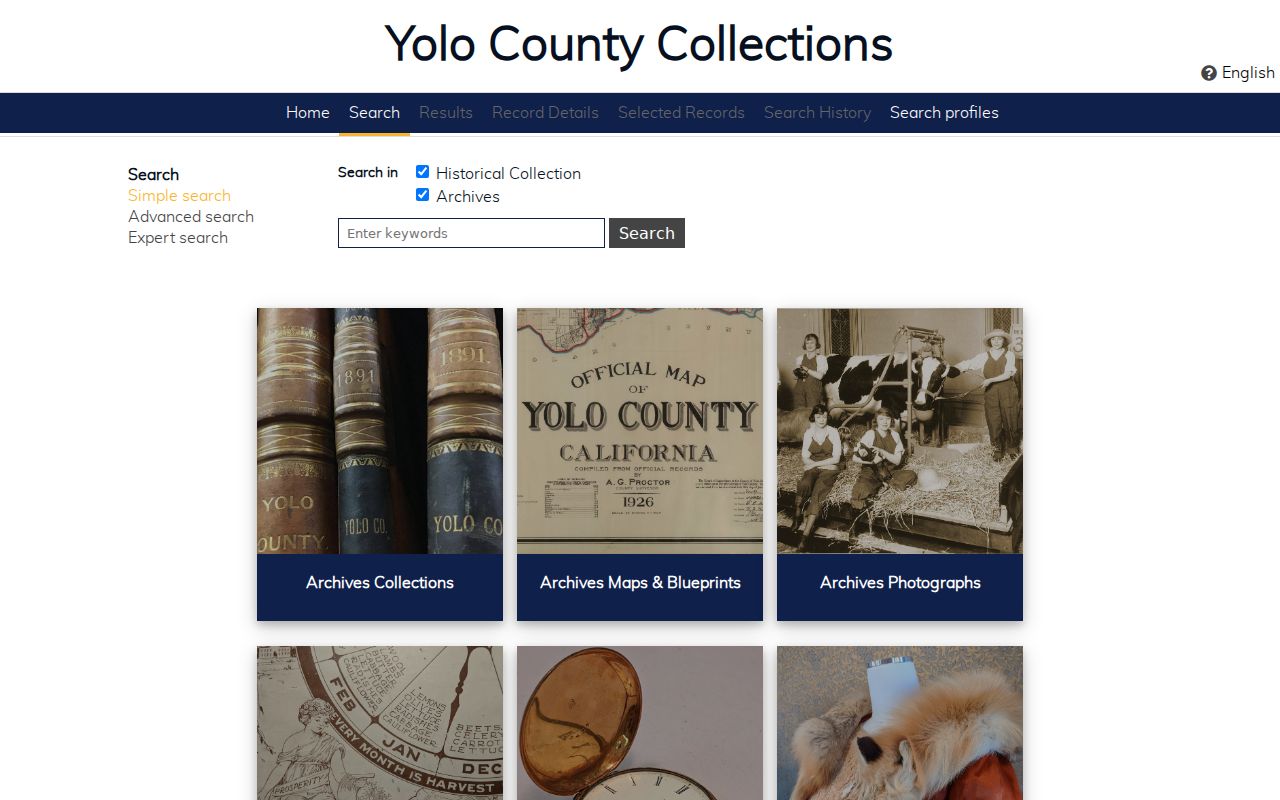
Use the catalog to narrow the visit, then cite the collection and year rather than citing a general archive landing page.
The 1870 Yolo City Directory Gazetteer
The 1870 Western Shore Gazetteer and Commercial Directory is a local color layer as well as an early city directory. It was published by C.P. Sprague and H.W. Atwell and covers Yolo County’s people, places, and commercial life in one volume. The digitized copy is available through Open Library, with an Internet Archive route attached to the work record. It should be treated as a historical publication, not as a current roll.
A countywide gazetteer can place a surname, business, settlement, or occupation in context when later Woodland directories do not reach far enough back. Read the page image, preserve the printed spelling, and note whether a reference is a person, a business, a civic place, or a description of the county. A gazetteer clue becomes stronger when it meets a deed, tax entry, newspaper notice, church register, or later directory.
The digitized screen below is useful because it keeps the 1870 source visible rather than reducing it to an unsourced name list.
Use the 1870 volume to frame a question, then move to the custodian that holds the record type needed to test it.
Yolo City Directory Reverse Address Sections
Address searching is possible only when the volume provides a street or householder section. The Archives notes a directory method of searching a surname alphabetically, recording exact spelling, spouse or status notation, occupation, and residence, then using a street or householder section where the volume actually offers it. That caution is important for Yolo because the inspected research did not verify the exact layout of every Polk volume.
For a known address, begin with the modern APN and legal description if the question concerns a former property. Then inspect the matching directory years in the Archives, keeping the old street spelling and any block or cross-street clues. A street section can reveal a nearby printed entry, but it cannot establish that every person at the address was listed. A census and a newspaper may record people the directory omits.
The modern parcel path belongs on the Yolo street directory page. The city directory shelf supplies the historical name and address snapshot. Keeping those roles separate prevents a reverse directory from being treated as a live address database.
Trace Family History in Yolo City Directories
A city directory becomes useful for family history when several years are read as a sequence. Begin with a known name or address, record the first and last appearance, and compare each change with a released census, deed, obituary, church register, or cemetery clue. The current federal decennial census available for public use is 1950 until the 1960 release in 2032, so directories can fill some of the years between census snapshots.
- Choose the person or address and write down all spelling variants, initials, spouse notes, and known places.
- Search the surname section in the closest directory years, then record the full printed entry and page or volume.
- Use a street or householder section only if that volume includes one, and compare adjacent entries without assuming they are relatives.
- Pair a directory address with the matching 1940 or 1950 census and keep the date difference visible.
- Follow a disappearance to newspapers, the obituary index, probate, cemetery, church, deed, or assessor material.
A disappearance does not have one meaning. It may reflect a move, death, marriage or name change, an omitted entry, a publisher gap, or a change in the book’s coverage. A new address can be tested against a deed or map, while a death clue can be tested against an obituary or probate file. The strength comes from the overlap of sources, not from a single line in a Yolo city directory.
Pair Yolo Directories with Census Years
Directory years and census years answer different time questions. A directory is usually a publisher’s snapshot of a local community, while the census records an enumeration date and household composition. Place a 1940 or 1950 census beside the nearest directory, compare the address and names, and flag any difference for follow-up. A mismatch can mean a move between dates, an omitted person, a changed street label, or a different definition of household.
For older work, the County Archives and State Archives county-and-city records provide complementary paths. State Archives microfilm includes Yolo probate from 1850 through 1923, naturalization from 1850 through 1941, deeds from 1874 through 1901, homesteads from 1861 through 1914, deaths from 1863 through 1913, and marriages from 1906 through 1920. Those collections can test a directory clue without pretending that a printed address proves kinship.
Research note. Write the directory year and census year side by side, then record the reason for every difference before choosing a move, death, or name-change explanation.
Yolo City Directory Leads in Newspapers and Obituaries
Newspapers are the follow-up shelf when a directory entry needs a life event. Yolo County Archives reports more than 25,000 obituary references and holds Woodland Daily Democrat microfilm from 1878 to 1950 with gaps, The Mail of Woodland from 1890 to 1952 with gaps, and The Orange Peal from 1931 to 1992 with gaps. An obituary may name relatives, a residence, a church, or a place of burial, but it remains a published notice and should be checked against a civil, court, or archive record when the distinction matters.
Search the surname, spouse, street, and likely community, then record the newspaper title, date, page, and archive or digital route. A former address can be paired with a deed or directory. An heir clue can be carried to probate. A community notice can explain why a person appears in one yearbook or church register and not another. Keep the chain specific to the source.
Yolo City Directory Companions: Yearbooks, Church Registers, and Sanborns
A Yolo city directory is stronger when its neighbors on the historical shelf are used as companions. Woodland High yearbooks cover 1907 through 1997. Yolo County Historical Society transcriptions include Woodland Methodist Episcopal membership from 1860 through 1881 and registers through 1911, Methodist Episcopal South from 1896 through 1939, Woodland Christian Church from 1908 through 1943, Winters Methodist Episcopal South baptisms and marriages from 1869 through 1924, and Winters Church of Christ from 1876 through 1914.
Sanborn maps add structure and use. Free Library of Congress sheets cover selected Davis, Winters, and Woodland years, while local Woodland holdings extend through 1961. These maps do not list every person, but they can show whether a building, address pattern, or street context matches the directory period. UC Davis Archives and Special Collections also holds maps and aerial photos for several Yolo and Davis years, useful for neighborhood change rather than names.
Yolo City Directory Research: What the Historical Society Does Not Search
Yolo County Historical Society is a useful orientation point, but its published guidance says it does not answer genealogy questions. It routes those questions to Yolo County Archives. That is a helpful division of labor: the Society’s church transcriptions, projects, and community knowledge can identify a lead, while the Archives supplies reading-room access, catalogs, newspapers, property material, and the formal research appointment.
This boundary is an interest-layer detail worth keeping in a Yolo city directory workflow. It prevents a general historical contact from being treated as a search service and gives the question to the office with the relevant collection. The Historical Society can add local context, while the Archives remains the research destination.
The Yolo County Historical Society source view below shows the separate community-history route.
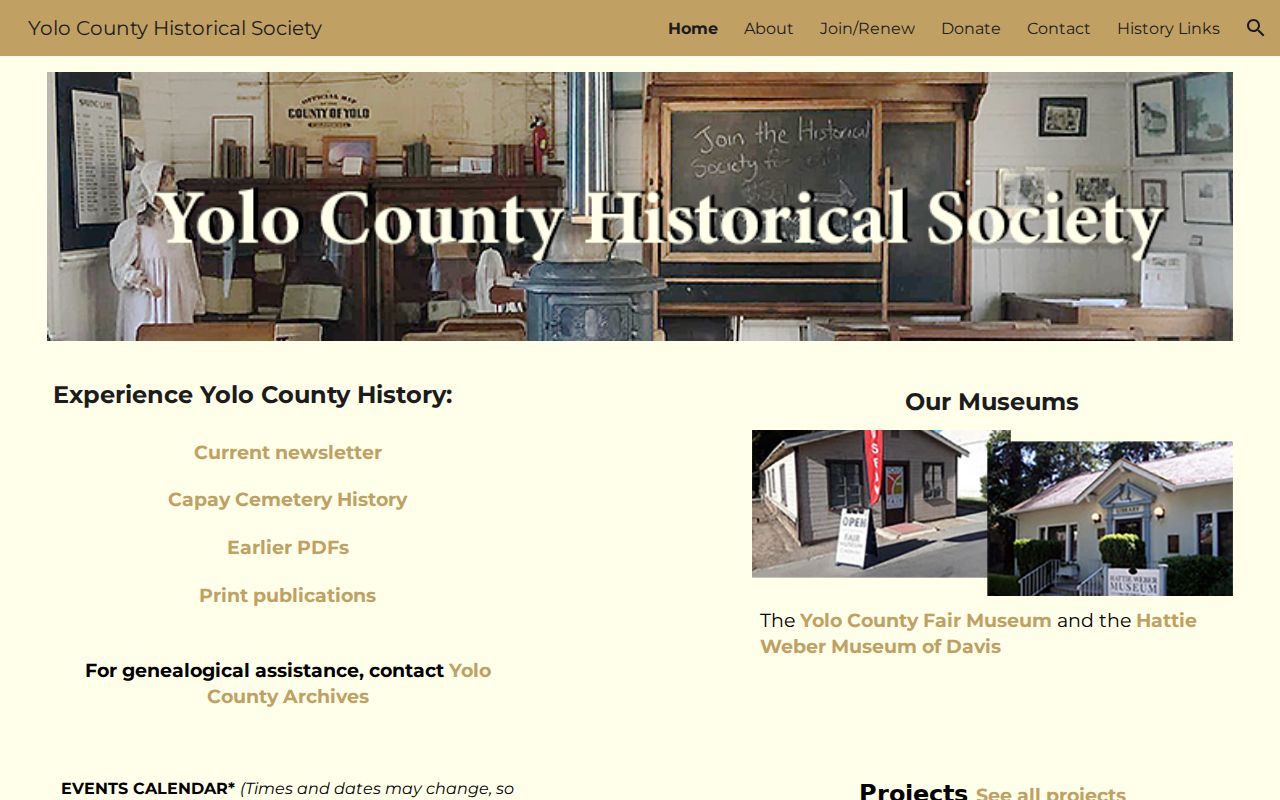
Use the Society for context and published transcriptions, then use the Archives for the collection search and reading-room record.
A careful city directory note ends with the volume, year, page, keeper, and access path. That small citation lets another family researcher return to the same shelf and see what the printed record actually said.